20 Fun Facts about Hellboy (2004)
Back in the early days when the comic book movie adaptation was beginning to come back into fashion for a whole new generation of moviegoers and comic book fans, one movie would stand out in both name and adaptation to become a beloved hit with comic book fans around the world.
While there had been other comic book adaptations in the past with Superman (1978), Superman II (1980), Batman (1989), Batman Returns (1993) and The Crow (1994), this one was quite special.
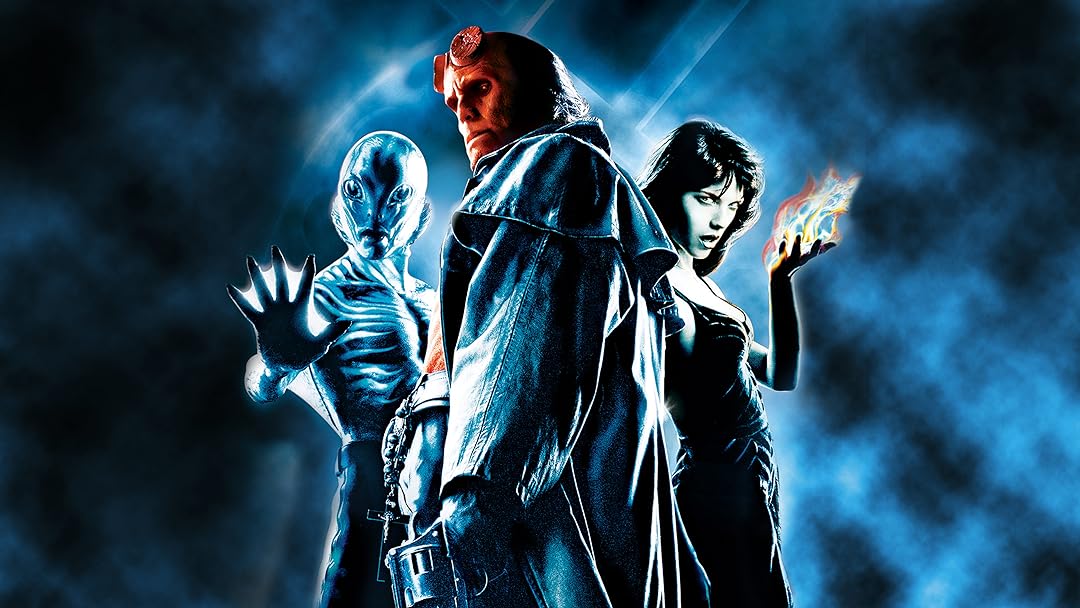
Independently created and owned by Mike Mignola and published through Dark Horse Comics, Hellboy has become a beloved series starring a half-demonic being named Anung Un Rama (translated as “and upon his brow is set a crown of flame”), or more commonly referred to as Hellboy, who helps to fend off the forces of Hell and other supernatural forces of evil to protect humanity via his involvement with the Bureau for Paranormal Research and Defense (B.P.R.D.), an international non-governmental agency.
With the rebirth of the comic book adaptation thanks to the success of X-Men (2000), Spider-Man (2002) and Hellboy (2004), it would reignite the spark that would eventually lead to the development of the modern comic book movies that we all know and love today, helping to usher in the golden age of Marvel’s Cinematic Universe and the new DC Comics relaunch of their comic book universe (DCU) with the arrival of James Gunn’s Superman in 2025.
So to honor the 20th anniversary of Hellboy hitting the silver screen, here are 20 Fun Facts about the movie.
1. The Hellboy (2004) film’s story is loosely inspired by the first comic book mini-series titled “Hellboy: Seed of Destruction” published by Dark Horse Comics, which was the first storyline to introduce Hellboy to the world.
2. Guillermo del Toro is an avid lover of comic books. One of his personal favorites has been Mike Magnola’s Hellboy series since his early 30’s. Hellboy has been cited by del Toro as one of his great visual influences, along with the works of Will Eisner, Richard Corben, Carl Barks, Bernie Wrightson and Jack Kirby.
3. Directed and written by Guillermo del Toro, he and Mignola’s vision for the film was to be Ray Harryhausen inspired in terms of its action and design. Their love of folklore, pulp fiction stories, pulp magazines and the art of storytelling quickly cemented a strong friendship and collaboration while working on the Hellboy set.
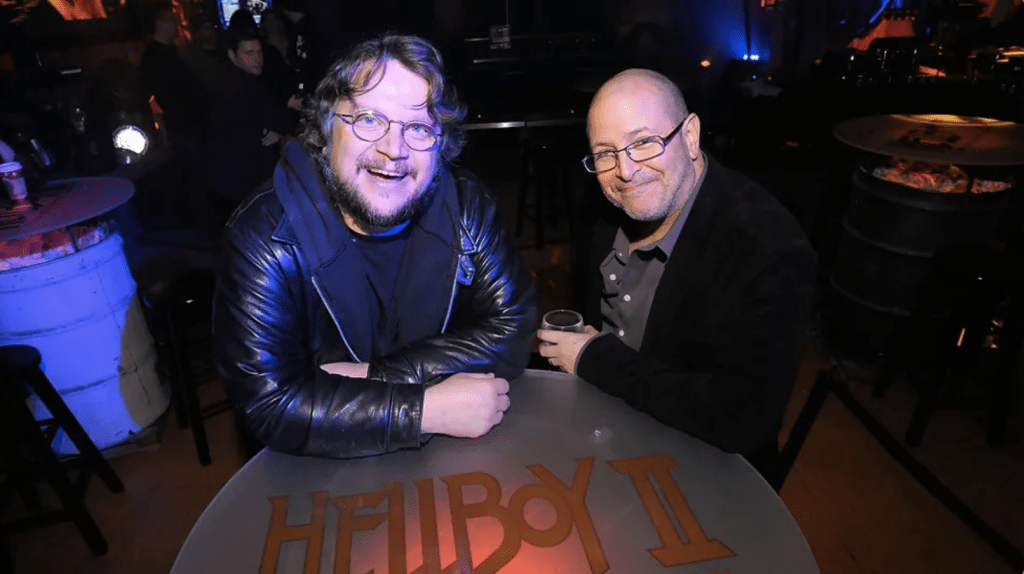
4. Del Toro loved comic book artist Jack Kirby and special effects Ray Harryhausen’s action style in their respective mediums, and made the effort to emulate them in the film’s action scenes.
5. Multiple studios rejected the pitch for the film for various reasons throughout the years. This included everything from the original title name of Hellboy to even Ron Perlman being attached to be its lead.
6. Originally Ray Harryhausen was invited by del Toro himself to teach his animation team, but ultimately declined because he felt that too many films at the time had become too violent.
7. For the film’s story and various set pieces, del Toro researched various occult Nazi philosophies and Nazi scientific research into the occult. This can be seen in the very first scene of the movie.
8. Other influences and demonology for the film included the Cthulhu Mythos, created by H.P. Lovecraft. This can be seen in the Sammael creatures design, who have physical similarities to Nyarlathotep and Cthulhu.
9. The use of labyrinths became the main motif in the film, as it represented Hellboy’s internal and external conflict of “choosing the right path” when it came to his demonic nature and his bond with humanity. On the commentary track of the film, del Toro stated “A labyrinth, it is said, is not a place to be lost, but a place to find yourself.”
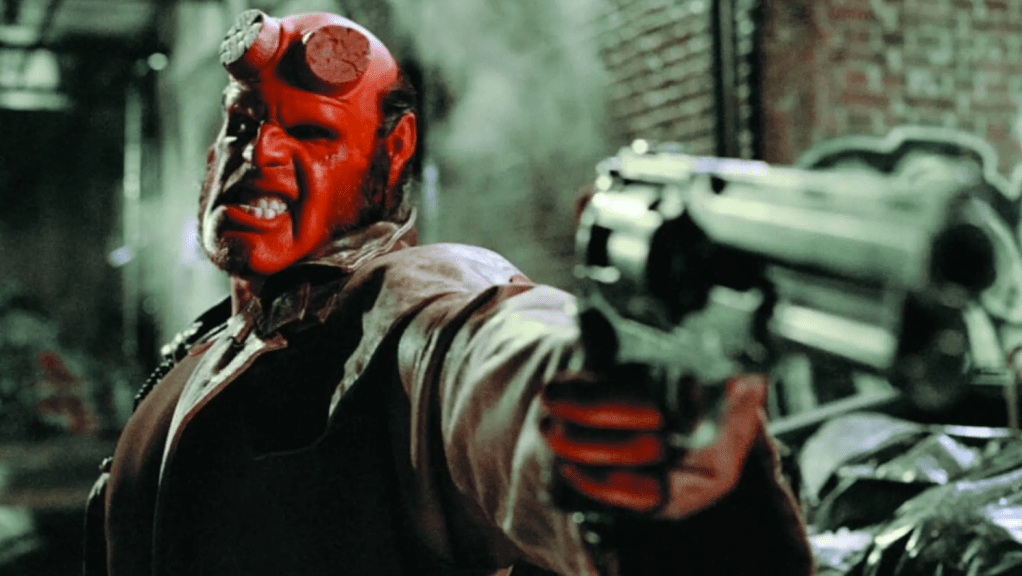
10. Del Toro chose makeup artist Jake Garber to turn Ron Perlman into the big red demon Hellboy. Some of Garber’s movie credits include Kill Bill Vol. 1 & Vol. 2, The Hulk and Austin Powers in Goldmember.
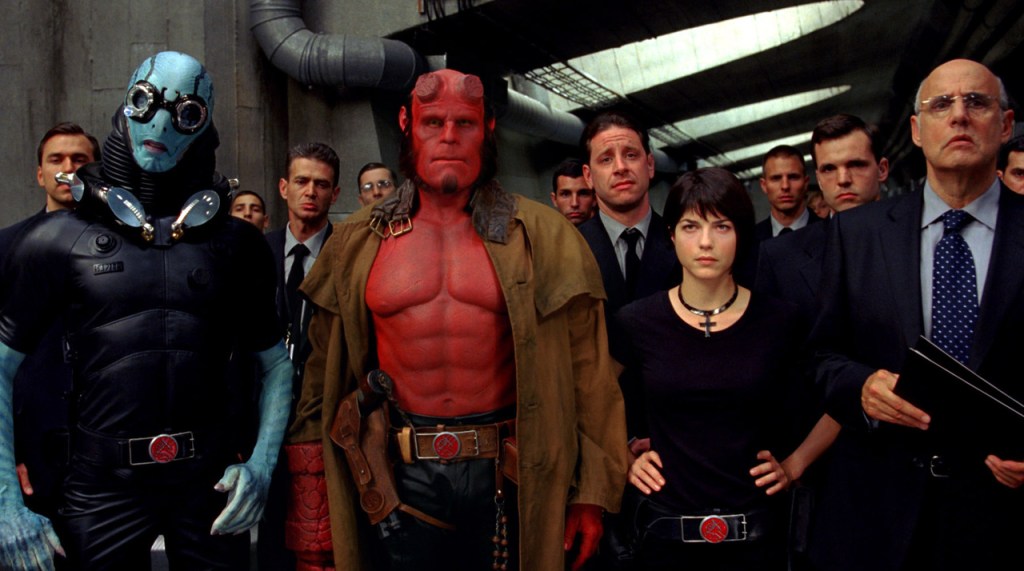
11. Originally, Vin Diesel was considered for the role of Hellboy when the film was pitched to Universal Pictures. Ironically, after the modest success of Hellboy and seeing the popularity of superhero-based comic books movies take off, Universal Pictures would secure the rights to distribute the second film titled Hellboy II: The Golden Army.
12. Both del Toro and Mignola agreed that only Ron Perlman was the best choice for the role of Hellboy.
13. While legendary physical actor and contortionist Doug Jones was chosen to wear the layers of makeup for the character of Abe Sapien, the voice of the character was dubbed by actor David Hyde Pierce. However, Pierce refused to have his name credited in the film and even refused to do press tours, strongly believing that Jones created the character and did not want his name to detract from Doug Jones performance.
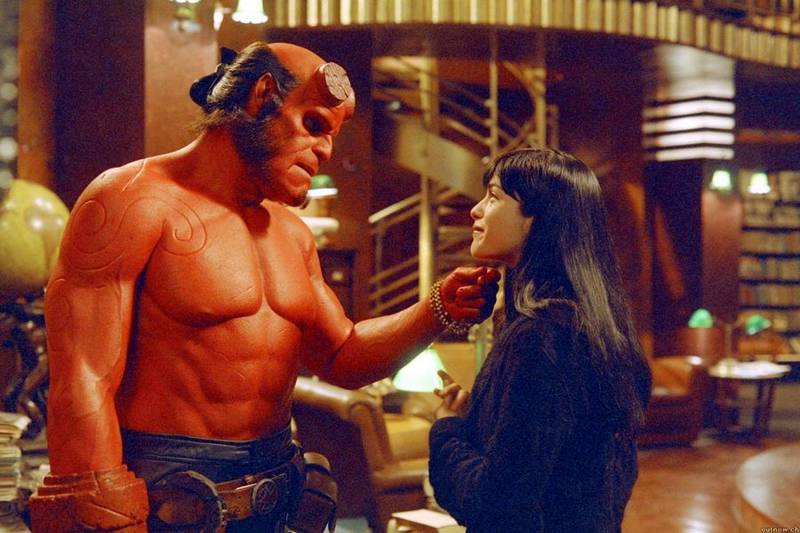
14. To develop a unique take on the love story aspect between Hellboy (Ron Perlman) and Liz Sherman (Selma Blair), del Toro took the story idea of Beauty and The Beast and instead reversed it. He said in an interview “I wanted the beauty to turn into a beast in the end to fully assume her mortal gifts… and when she accepts herself for what she is, a monster, then she can love the monster [Hellboy].” This is ironic, as Perlman also played the role of the Beast in the 1987 TV series on CBS of the same name.
15. Filming Hellboy only took 130 days. From Monday to Saturday they would film the movie, with Sundays being reserved for editing.
16. In the original director’s cut of the film, the character of Rasputin was supposed to have both of his eyes gouged out when he enters the portal where baby Hellboy is expelled from. But for the PG-13 rating of the film it did not work. “I thought the eye-gouging, the cosmic eye-gouging, was not graphic enough for people to get the point,” del Toro said. The later released Director’s Cut on DVD and future releases of the movie, it was restored, along with additional scenes.
17. Due to an error from several projectionists when changing the reels of the film in the theater, one key sequence was missed in the final act of the movie. Some confused moviegoers reported this, which prompted del Toro to send out an email contact form to report the misstep and have it corrected. However not all errors were corrected.
18. When Hellboy premiered nationwide, several movie theaters refused to show the movie, not wanting the word “Hell” to be advertised. Some theaters in the southern United States even advertised the movie as “Helloboy,” wishing to avoid sacrilege perceptions as The Passion of The Christ was also premiering at that same time. Some theaters even dropped the movie altogether at Easter with no reason for it.
19. A sequel to this film titled Hellboy II: The Golden Army and two direct to video animated films were also made (Sword of Storms and Blood and Iron) all starring Ron Perlman, Selma Blair and Doug Jones in live action and their respective voice roles.
20. While originally planned as a trilogy, the third and final of Del Toro’s Hellboy films never materialized. Even with the success of Hellboy (2004) and Hellboy II: The Golden Army, several factors lead to its end. Two in particular were the epic scope that Del Toro envisioned but did not have the financial backing to make it happen from the studio and Ron Perlman’s own physical health not allowing him to do the kind of work that required it. In 2017, Del Toro announced that Hellboy 3 was not going to happen.
And that’s my 20 Fun Fact about the 2004 Hellboy movie to honor its 20th anniversary. What’s your favorite scene in the film? Do you still want Hellboy 3 to be made one day? Let us know in the comments below!
And for more updates on pulp films, movie news, celebrating milestones, upcoming physical releases of classic films and fun posts, check out The Pulp Movie Palace on X (formerly Twitter), Facebook, Instagram and YouTube!
 Pulp Movie Palace
Leave a comment